
One popular strategy is to hire contract workers.

Indian companies are expected to dole out an average increment of 9.1 per cent in 2022, higher than the pre-COVID-19 increment in 2019, as companies are focusing on retention of talent through rewards. According to the 2022 Workforce and Increments Trends Survey by Deloitte Touche Tohmatsu India LLP, the average India 2022 increment is expected to go up to 9.1 per cent from eight per cent in 2021. Moreover, the 2022 projected increment is higher than the pre-COVID-19 increment in 2019 by 50 basis points (bps).
Companies in India are expected to dole out an average increment of 7.3 per cent to employees this year amid faster-than-expected economic recovery and revival in business and consumer confidence, according to a survey. The first phase of the 2021 Workforce and Increment Trends Survey by Deloitte Touche Tohmatsu India LLP (DTTILLP) also said the average increment this year will be higher than 4.4 per cent seen in 2020 but lower than 8.6 per cent given by companies in 2019. As many as 92 per cent companies that participated in the survey plan to give an increment in 2021 compared to only 60 per cent last year.
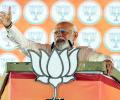
In nearly 100 seats, the BJP stands almost no chance of winning. In 200 seats, it is a direct fight between the BJP and the Congress where the BJP has an upper hand. In 243 seats, the BJP is pitted against regional parties and it is not going to be easy. That is why 400 seats may end up as a pipe dream, states Ramesh Menon, author of Modi Demystified: The Making of a Prime Minister.

India's manufacturing sector activity hit the highest level in eight months in July, driven by a significant rise in business orders, a monthly survey said on Monday. The seasonally adjusted S&P Global India Manufacturing Purchasing Managers' Index rose from 53.9 in June to 56.4 in July, reflecting the strongest improvement in the health of the sector in eight months. The July PMI data pointed to an improvement in overall operating conditions for the 13th straight month.

SBI's home loans, which offer a lower interest rate in the initial years and rate increases in the later years, were termed teaser loans by the Reserve Bank of India.

"Of the structural reforms, the GST has been the most historic in our country. Its chief architect is not with us today. I pay homage to the visionary leader late Arun Jaitely. GST has been gradually maturing into a tax that has integrated the country economically," she said during her budget speech.
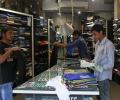
Firms said subdued demand conditions, unfair pricing among competitors and economic woes affected the sector.

Manufacturing activities in India accelerated further and touched a four-month high in April, boosted by robust new business growth, mild price pressures, better international sales, and improving supply-chain conditions, a monthly survey said on Monday. The seasonally adjusted S&P Global India Manufacturing Purchasing Managers' Index (PMI) increased from 56.4 in March to 57.2 in April, indicating the fastest improvement in the health of the sector so far this year. The March PMI data pointed to an improvement in overall operating conditions for the 22nd straight month.

"Current indications are that India will not only achieve the target of $200 billion but surpass it in 2010-11... The gradual withdrawal of stimulus measures by India and other countries is not likely to adversely affect India's rising exports," the survey said.

'Give cash assistance of Rs 75 per person per day and an android phone and you will see the economy reviving.'

India's services activity expanded at the fastest rate in a year during February, while employment fell further and companies noted the sharpest rise in overall expenses, a monthly survey said on Wednesday. The seasonally adjusted India Services Business Activity Index rose from 52.8 in January to 55.3 in February, pointing to the sharpest rate of expansion in output in a year amid improved demand and more favourable market conditions. The index was above the critical 50 mark that separates growth from contraction for the fifth month in a row during February as the roll-out of COVID-19 vaccines led to an improvement in business confidence towards growth prospects.
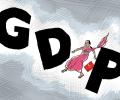
India's gross domestic product (GDP) growth slowed to 4.1 per cent in January-March 2022 period, while for the full year 2021-22 the growth stood at 8.7 per cent, according to the government data released on Tuesday. GDP at constant (2011-12) prices in Q4 2021-22 is estimated at Rs 40.78 lakh crore, as against Rs 39.18 lakh crore in Q4 2020-21, showing a growth of 4.1 per cent, as per the National Statistical Office (NSO) data. India's GDP growth has slowed for the third straight quarter.

'The way discrimination against Muslims has become almost normalised is very upsetting.'

Yesterday's Budget, last week's Economic Survey and the coming Approach Paper to the Twelfth Plan will provide the compass to help India navigate the uncertainties of the post-crisis world.
The Indian services sector growth touched a six-month high in December, supported by a robust intake of new work and favourable market conditions, a monthly survey said on Wednesday. The seasonally adjusted S&P Global India Services PMI Business Activity Index rose from 56.4 in November to 58.5 in December, highlighting the strongest rate of expansion since mid-2022. For the 17th straight month, the headline figure was above the neutral 50 threshold.

The Survey lists some of the challenges that might impede India's progress.
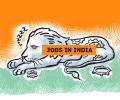
The Prime Minister's Office has decided to set up a panel, led by former chief statistician T C A Anant, to deliberate on whether the enterprise-level quarterly data, which is released by the labour bureau, should be discontinued.

In Madhya Pradesh, the C-Voter poll projections gave the BJP 107 seats with a vote share of 41.5 per cent, against Congress' vote share of 42.3 per cent and a simple majority of 116 seats.
India's manufacturing sector activities witnessed faster growth in April amid quicker increases in production as well as factory orders, and renewed expansion in international sales, a monthly survey said on Monday. The seasonally adjusted S&P Global India Manufacturing Purchasing Managers' Index (PMI) rose from 54.0 in March to 54.7 in April, as a retreat of COVID-19 restrictions continued to support demand. The April PMI data pointed to an improvement in overall operating conditions for the tenth straight month. In PMI parlance, a print above 50 means expansion, while a score below 50 denotes contraction.

Double-digits salary hikes are making a post-pandemic comeback on the back of a buoyant business outlook in 2023, according to global professional services firm Aon. Aon's latest "Salary Increase Survey in India" has not only projected a 10.4 per cent average hike across sectors for 2023, but also identified actual hikes in 2022 at 10.6 per cent as against its previous projection of 9.9 per cent in February. The figure of 10.6 per cent is the highest since 2012, whereas the 10.4 per cent levels projected for 2023 were last seen in 2015.

India has emerged as one of the top three choices for investments in the next 2-3 years, with more than two-thirds of respondents in a survey of multinational companies (MNCs) citing the country as their number one choice for future investments. According to the FDI survey released on Tuesday by CII in association with EY, about half of the respondents see India amongst the top three economies or leading manufacturing destinations of the world by 2025.

'We should not underestimate the power of Hindutva.'

Today, with growth having slowed and macro-economic challenges in every direction, would the government have benefited from the advice of 'Harvard' economists? asks T N Ninan.

More and more women are making their presence felt in jobs related to sciences, technology, and engineering across organisations.
In the pre-budget Economic Survey 2010-11, the Union finance ministry made a strong pitch for the pro-growth impact of investment in human capital adding, "fortunately, there is awareness of this in India and efforts are afoot in terms of budgetary allocation and actual initiatives to boost the development of skill and human capital."

The pre-Budget Economic Survey on Wednesday asked the government to enforce user charges and evolve a regulatory framework that fosters competition for attracting investment in infrastructure creation.

Local television showed images of a fallen mosque minaret with rubble lying on smashed cars.

The share of housing sector to the overall GDP (gross domestic product) is likely to rise by one per cent to 6 per cent on increased investment.

More than 70 per cent of Indian youth aged between 15 and 29 can't!

'...it gets a survey report that they are going to lose elections.' 'The fear of losing elections will make them immediately conduct a caste census.'

Whilst substantive public allocations have been made in the infrastructure sector, this strategy is plateauing due to the fiscal deficit constraint, capacity limitation of statal implementing agencies, the declining ability of PSUs, and the precarious situation of the Railways' operating ratio. It is, thus, high time to get the policy compass to point at rejuvenating private sector investments in infrastructure, says Vinayak Chatterjee.

'ESG is actually a concept which cannot be applied effectively in the very short run.'
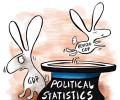
It is also likely to assume a deflator of around 4 per cent. That could take the nominal GDP outlook for FY21 to around 10 per cent. It is this nominal GDP forecast on the basis of which the finance ministry is calculating key Budget targets like the fiscal deficit as a percentage of GDP and tax revenue growth for the coming year.

De-scaling of businesses, job losses and subsequent impact on disposable incomes has created negative sentiment among traders, business owners and workers alike, says Abhishek Waghmare.
India's services sector activities touched the highest mark since April 2011 amid ongoing improvements in demand conditions, even as cost pressures in the service economy remained stubbornly high, a monthly survey said on Tuesday. The seasonally adjusted S&P Global India Services PMI Business Activity Index rose from 58.9 in May to 59.2 in June -- its highest mark since April 2011. For the eleventh straight month, the services sector witnessed an expansion in output. In Purchasing Managers' Index (PMI) parlance, a print above 50 means expansion while a score below 50 denotes contraction.

'The upper caste elite's belief that they are casteless is a belief that is available only to the upper castes. Because all the lower castes are reminded by society every day what their caste is.'

Let's wait for the monetary policy on February 8 -- to see how it complements the fiscal commitments, points out Tamal Bandyopadhyay.

India's GDP may turn positive at 1.3 per cent in the third quarter of 2020-21, having witnessed contraction in the previous two quarters due to the coronavirus pandemic, as the number of cases is falling and public spending has started rising, according to a report. The government will release the GDP numbers for the October-December quarter of the current fiscal on Friday. Projecting that the gross domestic product (GDP) may have returned to the black in the last quarter of the calendar year 2020, DBS Bank in the report said the full-year growth in real terms may be at a negative 6.8 per cent.
With people reposing faith in the UPA and voting for stability, this is the government's chance to fulfill its promises, ensure growth and development of the country, check runaway prices, and offer succour to the aam aadmi.
 © 2026 Rediff.com - Advertise with us - Disclaimer - Privacy Policy - Sitemap - Feedback - About us - Terms of use - Grievances